
AI in Digital Marketing
In today’s competitive online landscape, AI in digital marketing has become one of the most powerful technologies for businesses looking to increase visibility, improve customer engagement, and maximize conversions. Artificial Intelligence is no longer limited to automation alone. It now drives personalized experiences, predictive analytics, intelligent advertising, content optimization, customer service, and advanced decision-making.
Businesses that integrate AI into their marketing strategies gain faster insights, stronger customer relationships, improved campaign performance, and higher ROI. From startups to global enterprises, AI-powered marketing tools are reshaping how brands interact with consumers across every digital platform.
Key Takeaways
- India adopts a principle-based AI governance framework anchored in seven Sutras to enable safe, trusted, and inclusive AI innovation across sectors.
- The guidelines recommends establishment of new national institutions including the AI Governance Group, Technology & Policy Expert Committee, and AI Safety Institute.
- AI governance guidelines prioritises innovation over restraint, positioning AI as a catalyst for inclusive growth, competitiveness, and the vision of Viksit Bharat 2047.
Resources by ” Government of India, Press Information Bureau
What is AI in Digital Marketing?
Artificial Intelligence in digital marketing refers to the use of machine learning, natural language processing, predictive analytics, and automation technologies to improve marketing performance. AI analyzes large volumes of customer data, identifies patterns, predicts user behavior, and automates marketing tasks with exceptional accuracy.
Modern AI marketing systems can:
- Analyze customer behavior in real time
- Personalize user experiences
- Automate email campaigns
- Optimize paid advertising
- Generate content ideas
- Improve SEO strategies
- Predict future trends
- Enhance customer support through chatbots
AI enables marketers to make data-driven decisions instead of relying on assumptions, resulting in better outcomes and more efficient marketing operations.
Why AI is Important in Digital Marketing?
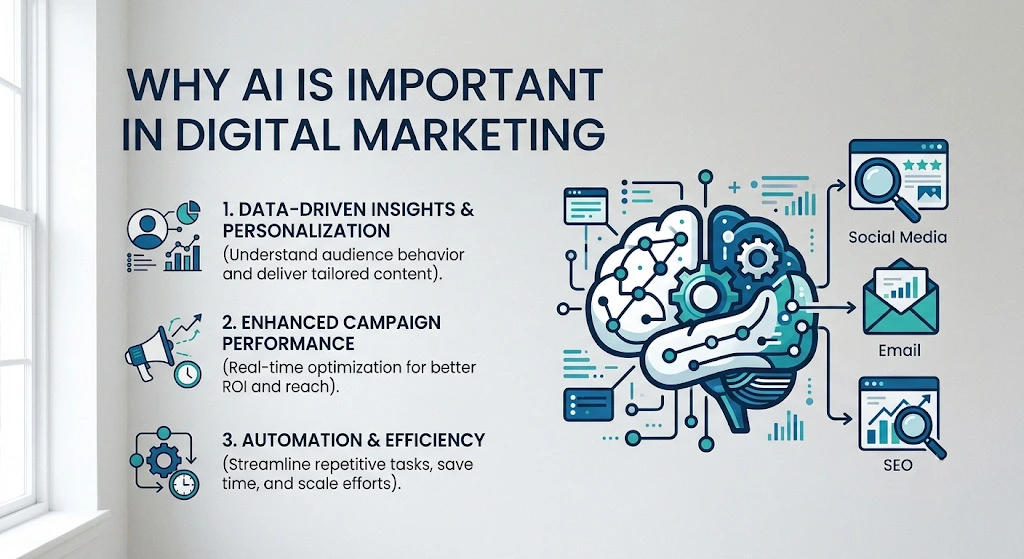
The rapid growth of digital channels has created massive amounts of consumer data. Managing this data manually is nearly impossible. AI solves this challenge by processing information instantly and delivering actionable insights.
Key Benefits of AI in Marketing
1. Enhanced Customer Personalization
AI studies user behavior, interests, demographics, browsing history, and purchasing patterns to deliver personalized content and product recommendations.
Personalization improves:
- Customer satisfaction
- Engagement rates
- Brand loyalty
- Conversion rates
- Retention rates
Brands using AI-driven personalization create highly targeted experiences that make customers feel understood and valued.
2. Improved Marketing Automation
AI automates repetitive marketing tasks such as:
- Email scheduling
- Social media posting
- Ad optimization
- Lead nurturing
- Customer segmentation
- Performance reporting
Automation reduces workload while increasing operational efficiency.
3. Better Decision Making
AI-powered analytics help businesses identify trends and customer behaviors quickly. Marketers can make smarter strategic decisions using real-time insights rather than outdated reports.
4. Increased ROI
AI improves campaign targeting and reduces wasted advertising spend. Businesses can optimize campaigns continuously based on performance data, leading to higher returns on investment.
How AI is Used in Digital Marketing
AI applications in digital marketing continue to evolve rapidly. Businesses now use AI across multiple channels to improve marketing effectiveness.
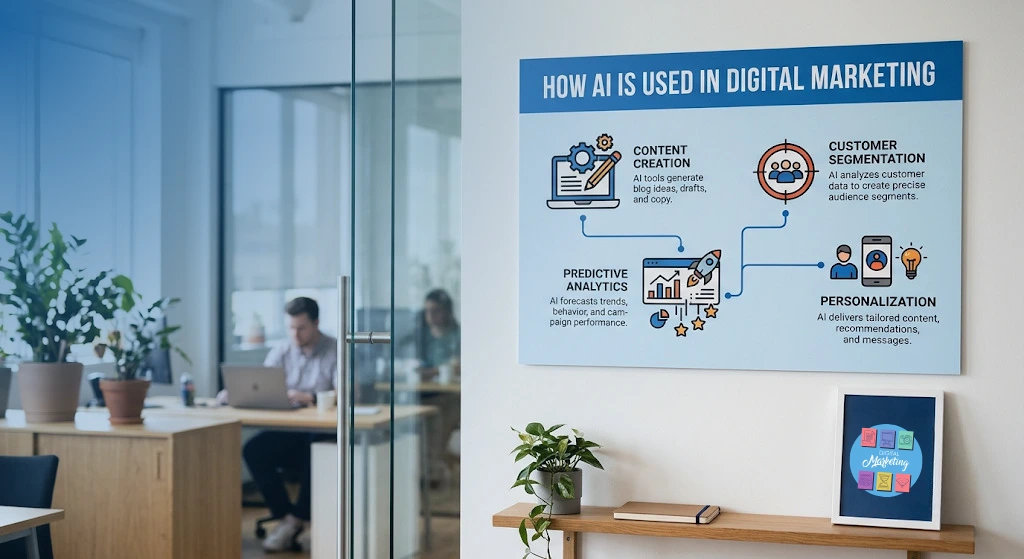
AI-Powered Content Creation
AI tools help marketers create:
- Blog topics
- Social media captions
- Product descriptions
- Email subject lines
- SEO meta descriptions
- Video scripts
AI speeds up content production while maintaining consistency and relevance. However, combining AI with human creativity produces the strongest results.
Benefits of AI Content Creation
- Faster content generation
- Improved keyword optimization
- Better scalability
- Enhanced audience targeting
- Consistent publishing schedules
AI in Search Engine Optimization (SEO)
AI has significantly changed how SEO works. Search engines now use advanced AI algorithms to understand user intent, content quality, and search relevance.
AI Helps SEO Through:
- Keyword research
- Search intent analysis
- Content optimization
- Voice search optimization
- Competitor analysis
- Predictive trend analysis
- Technical SEO audits
Businesses using AI-driven SEO strategies can improve rankings, organic traffic, and website visibility more efficiently.
Voice Search and AI
Voice assistants like Siri, Alexa, and Google Assistant rely heavily on AI. Optimizing content for conversational searches has become essential for modern SEO success.
AI in Social Media Marketing
Social media platforms generate enormous amounts of data daily. AI helps marketers understand audience behaviour and create more engaging campaigns.
How AI Improves Social Media Marketing
- Audience Analysis: AI identifies audience interests, behaviors, and engagement patterns.
- Content Recommendations: AI suggests the best content types and posting times for maximum engagement.
- Social Listening: AI monitors conversations, reviews, and mentions to analyze brand reputation.
- Chatbots for Customer Support: AI-powered chatbots provide instant responses to customer inquiries on social media platforms.
- Trend Prediction: AI detects emerging trends before competitors can capitalize on them.
Social media marketing becomes far more strategic and data-driven with AI integration.
AI in Email Marketing
Email marketing remains one of the highest-converting digital marketing channels, and AI makes it even more effective.
AI Features in Email Marketing
- Smart Segmentation: AI categorizes users based on behavior, purchase history, and engagement.
- Personalized Emails: I customizes subject lines, offers, and content for each recipient.
- Send Time Optimization: AI predicts the best time to send emails for maximum open rates.
- Predictive Analytics: AI forecasts which subscribers are most likely to convert.
These improvements significantly increase email engagement and conversion rates.
AI-Powered Chatbots and Virtual Assistants
Client service has become one of the most impactful uses of AI in digital marketing.
Benefits of AI Chatbots
- 24/7 customer support
- Instant responses
- Reduced operational costs
- Improved customer satisfaction
- Faster lead qualification
- Personalized assistance
AI chatbots can answer frequently asked questions, guide users through purchases, schedule appointments, and collect customer information automatically.
In the world, businesses using intelligent chatbots improve user experiences while reducing support workloads.
🔐 Source By: Telecommunication Engineering Centre:
Predictive Analytics in AI Marketing
Predictive analytics uses AI to forecast future customer behavior based on historical data.
What Predictive Analytics Can Do
- Identify likely buyers
- Predict customer churn
- Recommend products
- Forecast campaign performance
- Improve lead scoring
- Optimize pricing strategies
Predictive marketing helps businesses stay proactive rather than reactive.
AI in Paid Advertising
AI has transformed digital advertising platforms such as Google Ads and Meta Ads.
How AI Optimizes Advertising Campaigns
- Automated Bidding: AI adjusts bids in real time to maximize conversions.
- Audience Targeting: I identifies high-value audiences most likely to convert.
- Ad Performance Optimization: AI continuously tests headlines, visuals, and CTAs to improve campaign results.
- Fraud Detection: AI helps identify invalid clicks and suspicious traffic patterns.
With AI-powered advertising, businesses can reduce costs while improving campaign efficiency.

🔐 Source By: Telecommunication Engineering Centre:
Role of Machine Learning in Digital Marketing
Machine learning is a major branch of AI that enables systems to learn and improve automatically through data analysis.
Machine Learning Applications in Marketing
- Product recommendations
- Customer segmentation
- Dynamic pricing
- Behavioral targeting
- Content personalization
- Ad optimization
Platforms like Netflix, Amazon, and Spotify use machine learning extensively to personalize user experiences and increase customer retention.
AI and Customer Experience Optimization
Customer experience has become a key factor in digital success. AI enables businesses to create seamless and highly personalized customer journeys.
Ways AI Improves Customer Experience
- Personalized Recommendations: AI suggests products based on browsing and purchasing history.
- Real-Time Assistance: Virtual assistants provide immediate support during customer interactions.
- Behavioral Tracking: AI tracks user behavior to optimize website experiences.
- Improved Customer Insights: Businesses understand customer needs more accurately through AI analytics.
A superior customer experience increases loyalty, repeat purchases, and brand trust.
Challenges of AI in Digital Marketing
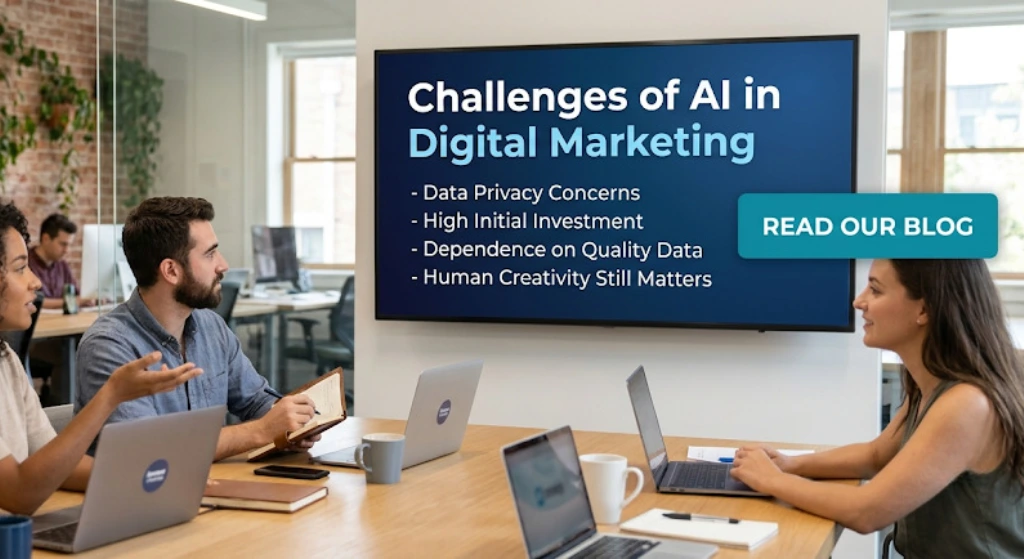
Common AI Marketing Challenges
- Data Privacy Concerns: Handling customer data responsibly is essential for maintaining trust and compliance.
- High Initial Investment: Advanced AI tools may require significant setup costs.
- Dependence on Quality Data: AI systems perform best with accurate and organized data.
- Human Creativity Still Matters: AI cannot fully replace human emotion, storytelling, and strategic thinking.
The most effective marketing strategies combine AI efficiency with human creativity.
Future of AI in Digital Marketing
The future of AI in digital marketing will continue evolving rapidly as technology advances.
Emerging AI Marketing Trends
- Hyper-Personalization: AI will create even more individualized customer experiences.
- Advanced Voice Search: Voice-based interactions will become increasingly common.
- AI Video Marketing: AI-generated videos and smart editing tools will grow rapidly.
- Predictive Customer Journeys: AI will anticipate customer needs before users take action.
- Autonomous Marketing Campaigns: Future AI systems may manage entire campaigns automatically with minimal human input.
Businesses that adapt early to AI innovations will maintain stronger competitive advantages in the digital marketplace.
Best Practices for Implementing AI in Marketing
To achieve maximum success with AI marketing, businesses should follow strategic implementation practices.

Effective AI Marketing Strategies
- Start with Clear Goals: Define measurable objectives before implementing AI tools.
- Focus on Data Quality: Accurate data improves AI performance significantly.
- Combine AI with Human Expertise: Use AI to support human creativity and strategic planning.
- Continuously Monitor Performance: Track campaign results and optimize strategies regularly.
- Invest in Customer Privacy: Maintain transparency and compliance with data protection regulations.
Successful AI adoption requires balance between automation, analytics, and authentic human engagement.
Final Words
AI in digital marketing is transforming how businesses attract, engage, and retain customers. From SEO and content marketing to customer service and advertising, Artificial Intelligence improves efficiency, personalization, and overall marketing performance.
Businesses leveraging AI technologies gain valuable competitive advantages through smarter decision-making, predictive insights, and enhanced customer experiences. As AI continues to evolve, companies that embrace intelligent marketing strategies will achieve stronger growth, better engagement, and long-term digital success.
The future of digital marketing belongs to brands that successfully combine AI-powered automation with human creativity, delivering personalized experiences that truly connect with modern consumers.
About the Author
This article was written by Sandeep Kumar Rajput, Digital Marketing Manager with expertise in SEO and performance marketing. Insights are based on Google Search Central guidelines and industry research.
Editorial note: This article is intended for educational and informational purposes. AI tool capabilities, platform features, and government guidelines may change over time. Readers should consult the official documentation linked in this article for the latest information.
Last updated: March 28, 2026.